
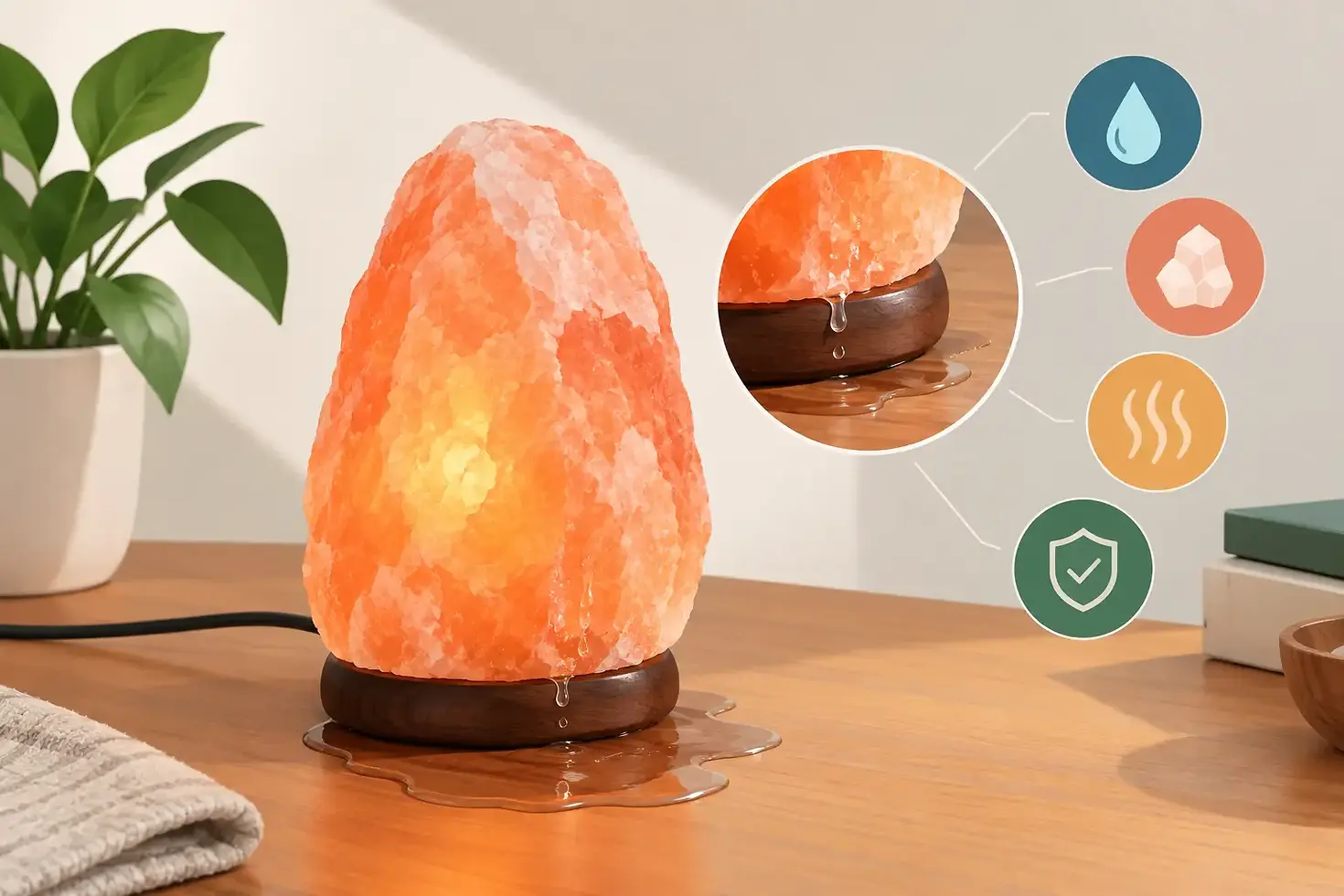
Why Is My Salt Lamp Leaking? Causes and Fixes
A damp patch beneath a Himalayan salt lamp can be worrying, especially when it appears on a favourite side table or wooden shelf. If you are asking, why is my salt lamp leaking, the reassuring answer is that the lamp is not leaking in the way a bottle or appliance would. It is reacting naturally to moisture in the air.
Himalayan rock salt attracts water vapour. In a humid room, that moisture can settle on the salt surface, dissolve a tiny amount of it and run down as salty water. This is often called ‘sweating’ or ‘weeping’. It is a normal property of natural salt, but it does need a little practical care to protect your lamp, furniture and electrical fitting.
Why is my salt lamp leaking in the first place?
Salt is hygroscopic, meaning it draws moisture from the surrounding air. The higher the humidity, the more likely your lamp is to become wet. Once enough moisture has collected, it carries dissolved salt down the outside of the lamp and onto its base or the surface beneath it.
This is why lamps are most likely to sweat in rooms that are naturally damp or poorly ventilated. Kitchens, bathrooms, conservatories, utility rooms and chilly rooms that develop condensation can all create the right conditions. A lamp placed close to an open window during wet weather may also take on more moisture than one kept in a warm, dry living room.
The lamp’s shape can make the moisture easier or harder to spot, but it does not change the cause. A natural salt lamp may show dampness around its uneven surface, while a sphere, pyramid or salt block may leave clearer droplets at the bottom. Every handcrafted piece is slightly different, and the mineral content and surface texture of natural Himalayan salt can vary too.
A switched-off lamp is more likely to sweat
The gentle warmth from a correctly fitted bulb helps keep the salt dry. When a lamp is left switched off for long periods, particularly in a humid home, it has less warmth to evaporate the moisture it absorbs. That is why some owners notice wetness after returning from holiday, or after a lamp has been stored away over winter.
This does not mean a salt lamp must be on all day. It simply means that regular, sensible use can help it remain dry. If you do not wish to use it daily, place it somewhere dry and consider wrapping it before longer storage.
It may be condensation rather than heavy sweating
A cold salt lamp brought into a warm, humid room can develop surface moisture just as a cold glass can. This can happen after delivery in cold weather or if the lamp has been kept in a garage, shed or unheated room. Allow it to come gradually to room temperature, then dry it carefully with a soft cloth.
If the wetness is clear and appears mainly around the cable entry, bulb holder or base, unplug the lamp before inspecting it. Salt moisture can travel downwards, so it is worth checking the lamp promptly rather than allowing a small damp patch to build up.
What to do when your salt lamp is wet
Start by switching the lamp off at the mains and unplugging it. Move it away from any electrical sockets, extension leads, books, fabrics or untreated wooden furniture. Blot the surface gently with a dry, lint-free cloth. Do not scrub, as salt is relatively soft and can be marked by rough cleaning.
Let the lamp dry in a warm, well-ventilated room. Once the exterior and base are fully dry, check that the bulb holder, cable and plug are dry too. If you have any concern that water has entered the electrical components, do not switch it back on. A qualified electrician can advise, or the fitting may need replacing.
Avoid trying to dry a lamp with a hairdryer, placing it directly against a radiator or leaving it in strong sun for prolonged periods. Fast, intense heat can be unkind to a natural salt crystal and may encourage cracking. Gentle warmth and airflow are the safer approach.
A brief dry-out routine is usually all that is needed:
Unplug the lamp and blot away visible salty moisture.
Place it on a dry towel in a warm room with good airflow.
Check that the wood base and electrical fitting are completely dry before use.
Once dry, use the lamp normally with the correct bulb and keep it away from damp areas.
How to stop a salt lamp sweating
The most effective solution is to improve the conditions around the lamp. Keep it in a dry indoor room rather than a bathroom, beside a sink or on a windowsill where condensation forms. If your home tends to feel damp, opening trickle vents, using an extractor fan when cooking and drying laundry with adequate ventilation can all help reduce humidity generally.
A dehumidifier can be helpful in persistently damp spaces, although it is not necessary solely for one lamp. The aim is not to create a perfectly dry house, but to avoid leaving a salt lamp where it is constantly exposed to moisture.
Use a protective coaster, tray or mat beneath the lamp. A non-porous base is especially useful on wood, veneer, painted furniture, stone and other surfaces that could be marked by salty water. Choose something stable and wide enough to support the lamp safely. This simple precaution is worthwhile even in a dry room, as it protects furniture from the occasional droplet.
Check that your lamp has an appropriate bulb and that it is working correctly. The low heat produced by the bulb is part of what helps keep the crystal comfortable and dry. Always follow the recommended wattage for the lamp fitting, and never fit a higher-wattage bulb in an attempt to stop sweating. Excess heat is not the answer and can create a safety risk.
Keep it out of steamy rooms
Salt lamps create a warm, restful glow, so it can be tempting to place one beside a bath. However, bathrooms are usually the least suitable location because steam and humidity give the salt a constant supply of water vapour. The same applies to a kitchen worktop near a kettle, hob or dishwasher.
For a calming atmosphere, a bedroom, lounge, hallway or home office is generally a better choice. In these spaces, a Himalayan salt lamp can bring natural texture and soft amber light without facing quite the same moisture challenge.
Can a leaking salt lamp damage furniture?
It can, particularly if salty water is left sitting on a surface. Salt residue may leave rings, affect some finishes and draw in further moisture. Wooden tables and cabinets are most vulnerable, but metal surfaces can also be affected over time.
If you find a wet patch, wipe it up straight away and dry the furniture thoroughly. Clean any salt residue according to the furniture manufacturer’s guidance, rather than soaking the area with water. Going forward, place the lamp on a protective mat or tray and check underneath it occasionally, particularly during wet weather.
The wooden base deserves attention too. If it feels damp, allow it to dry completely before placing the lamp back into use. Do not wash the salt crystal under a tap or immerse it in water. A damp cloth is rarely needed for cleaning, and a dry cloth is the best choice for routine dusting.
When should you stop using the lamp?
A little surface moisture is manageable. But if the lamp repeatedly forms a large puddle, the base stays saturated, or the electrical fitting becomes damp, stop using it until it has been thoroughly dried and assessed. Electrical safety comes first.
Cracks can also make a lamp more prone to shedding small salty fragments or retaining moisture. Fine natural lines are not always a problem in a hand-carved crystal, but a lamp that has split significantly or become unstable should not be used with a bulb inside it. Place it safely aside and seek advice on whether it can be repurposed as a decorative salt piece rather than a working lamp.
Storing a Himalayan salt lamp properly
If you are packing the lamp away for a while, make sure it is completely dry first. Remove the bulb if appropriate for the fitting, wrap the lamp in a dry cloth or paper, and store it in an airtight bag or container with a moisture-absorbing packet. Keep it in a dry cupboard indoors, not a garage, loft or garden shed where temperatures and humidity can fluctuate.
When you bring it back out, unwrap it and let it settle at room temperature before use. A little patience at this stage can prevent condensation and help preserve the lamp’s natural finish.
A salt lamp that sweats is simply showing the character of real Himalayan rock salt. Keep it warm, dry and well supported, and it can continue to bring a gentle, natural glow to your home while your furniture stays protected.


Comments